Guiding an Improved Dementia Experience
Guiding an Improved Dementia Experience (GUIDE)
The Guiding an Improved Dementia Experience (GUIDE) program through the Centers for Medicare & Medicaid Services (CMS) launched in 2024 as an 8-year pilot program. Healthcare providers had to apply for the program and had to be accepted as “GUIDE participants.” A majority of GUIDE participating locations went live with their services in July of 2025. This program focuses on the person living with dementia (the patient) from diagnosis until they are on hospice, living in a skilled nursing facility, or pass away. The goal of the program is to improve the quality of life for people living with dementia and their unpaid caregivers. This will not only help caregivers provide care at home longer, but it could also be a cost savings to families and CMS.
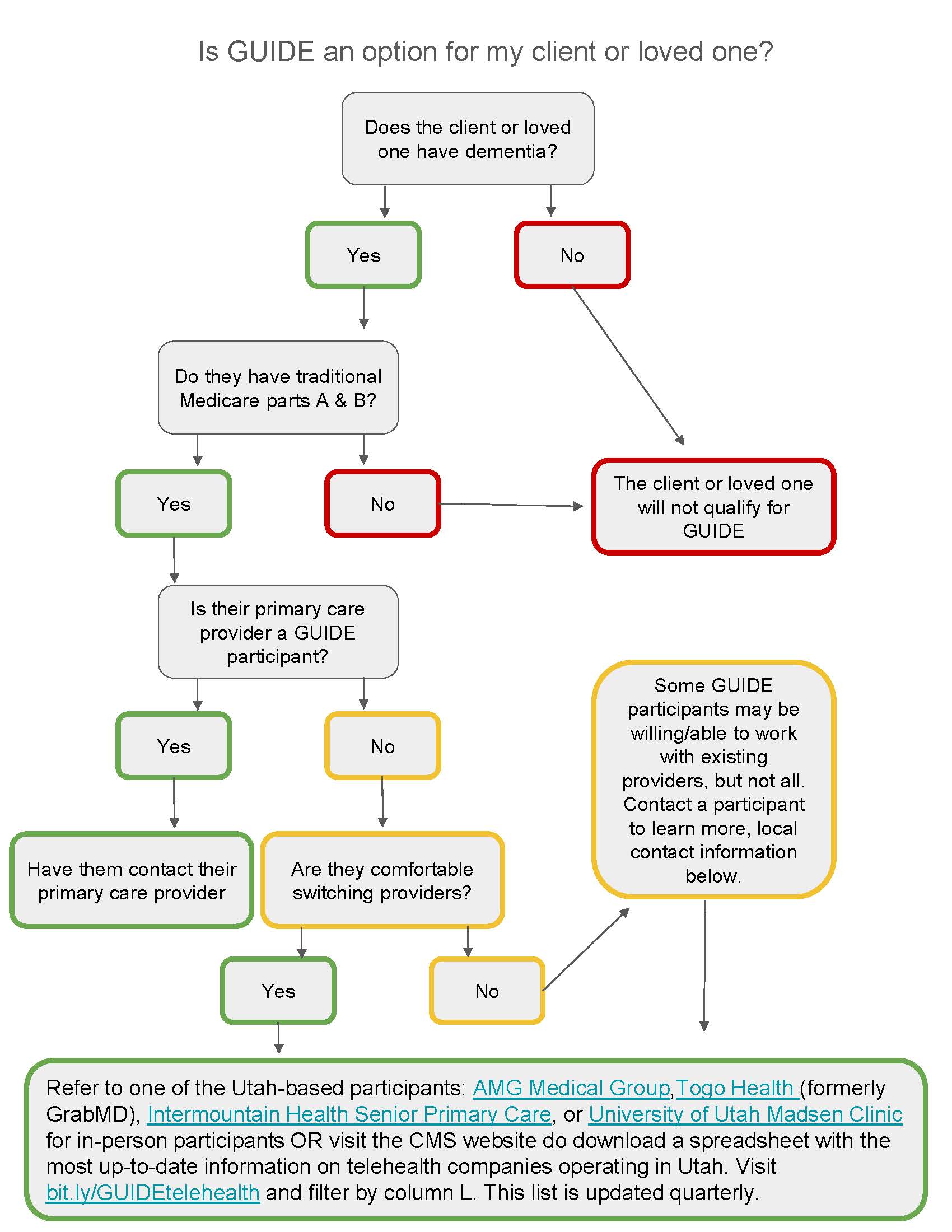
To qualify for GUIDE, the patient must have traditional Medicare parts A & B as primary insurance coverage and an official diagnosis of any type of dementia. The GUIDE participant can diagnose the patient if they have not been diagnosed already. Within the GUIDE program, CMS requires the GUIDE participant to offer specific services. These include:
- Comprehensive assessment & care planning: Identify individual health needs and build a care plan tailored to the services the patient needs.
- Caregiver support: An unpaid relative or nonrelative who helps as a caregiver can receive education and support, such as direct communication with a care navigator when they need it.
- Respite services: GUIDE participants can offer respite services with an annual cap of $2,500, which will renew each year. This benefit is only available to patients in the mid- to-late stages of dementia. Some participants may offer this to patients residing in Assisted Living or Memory Care communities, but not all will. The funding amount is subject to change.
- Coordination and support: Connection to community-based services like meals and transportation. Care teams will also work together to coordinate clinical and support services.
- 24/7 access: Care navigators help patients and their caregivers get care and 24/7 access to a care team member, helpline, or on-call phone line to ask questions and get support.
These services are required by the GUIDE program, but can be interpreted differently by the GUIDE participants within certain parameters. There will be differences from participant to participant on the amount and types of services offered.
All of the GUIDE participants can contract with various personal care, home health, and other types of organizations to assist with assessments and other in-person needs. In Utah, there are four local participants: AMG Medical Group, Togo Health (formerly GrabMD), Intermountain Healthcare Senior Primary Care, and University of Utah Madsen Clinic. There are many tele-health participants (out-of-state companies) who are contracting with local Utah companies to provide the in-person program requirements in various areas of the state. A complete list of those tele-health providers can be downloaded on the CMS website
Some things to be mindful of for patients and their families are:
- Is Original Medicare right for you? Before you make the switch, you can talk with a local State Health Insurance Assistance (SHIP) counselor for one-on-one help to help you understand the pros and cons of changing your coverage. To find a SHIP counselor, you can find your local Area Agency on Aging by clicking on your county at daas.utah.gov/locations.
- Some GUIDE participants will require you to switch to their medical providers as your primary care provider. Is this something you are comfortable with? If you are working with a tele-health participant, this could mean that your primary care provider would meet with you virtually rather than in person.
- If your main motivator is the respite funding, does the patient qualify for that benefit?
Some of the companies contracted with the GUIDE participants, will market themselves as “GUIDE Certified” or a “GUIDE Provider.” They may be the ones doing assessments or providing various services, but they are working under the authorized GUIDE participant who is the medical provider through this CMS grant.
GUIDE has great qualities and we are excited to see how the program works. As mentioned before, each participant will offer the program in a slightly different way. The Utah Department of Health and Human Services (DHHS) is working closely with the Utah-based participants to better understand their programs. The Utah DHHS is not a GUIDE participant and is only providing information about the program to Utahns. Please work with a GUIDE participant if you are interested in more information. Remember to ask questions, you have the power to choose your healthcare provider.
National Resources
- Centers for Medicare & Medicaid Services official GUIDE website
- National Dementia Care Collaborative (NDCC) provides resource kits for providers. This kit also includes two videos, one for clinicians and one for caregivers and families.